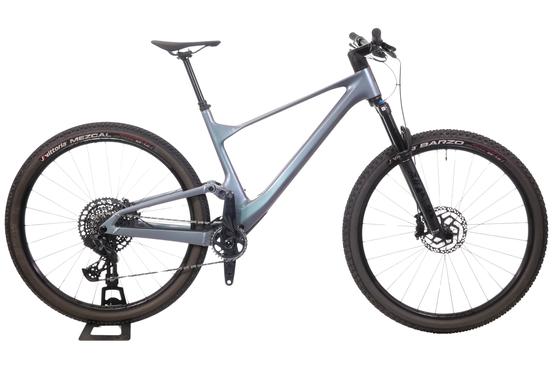
Ride feel & intended use
The Spark 920 is aimed at riders who want a do-it-all trail bike that leans toward efficiency for climbing and long rides, while still having enough capability to handle descents, rough trails, and technical features. The relatively short‑travel rear (120 mm) paired with more substantial front travel (130 mm) gives a plush, confident front end, while trying to maintain agility and pedalling efficiency. The TwinLoc system helps in switching between more aggressive modes (for descending or rougher terrain) and firmer/travel‑reduced modes for climbing or smoother sections. It’s not a pure downhill machine, but it packs enough capability that, for many trail riders, it means one bike can serve for many kinds of rides. The geometry, suspension layout, and component spec all point toward an upper‑mid or high spec trail bike that tries to hit a balance rather than specialise exclusively in one discipline.
Pros / trade‑offs
Because of its carbon construction, good suspension parts, and relatively light weight for what it offers, it tends to climb well, accelerate responsively, and feel sprightly on mixed terrain. The inclusion of high‑quality parts like the Fox 34 and Fox Nude shock, 12-speed GX Eagle, strong brakes, and tubeless ready wheels means fewer upgrades needed out of the box for many riders.
On the other hand, with more sophisticated components and suspension systems comes added complexity: maintenance can be more involved, remote‑lockout systems and suspension modes require some tuning, and parts like the FOX Nude EVOL may have more detailed service requirements. Also, as with most trail bikes that try to do many things, it won’t match a dedicated enduro rig in big drops and super rough downhill, nor match a pure cross‑country bike in ultra‑light uphill speed or minimalist simplicity.
Who it's good for
If you ride varied terrain — you climb, you descend, you hit technical stuff, you ride trails that aren’t perfect — the Spark 920 is ideal. It’s well suited to riders who want one bike that can handle weekend trail rides, longer rides with mix of climbs and descents, maybe some bike‑packing, without needing to switch bikes. It’s also good if you value component quality, weight, and having adjustability (suspension modes, geometry tweaks) built in.
If your riding is more singular (e.g. mostly downhill, or mostly very light XC), there might be better specialised options.